Source ultralight foil emergency sleeping bag for Hiking, Travel, Rescue
Find 30 ultralight foil emergency sleeping bag options from Jiangsu suppliers. Compare features like heat retention, waterproofing, and customization for outdoor, vehicle, and hospital applications.
Key considerations
Products List






Comprehensive Sourcing Guide
Strategic Sourcing Guide for Ultralight Foil Emergency Sleeping Bags
Understanding the Core Product Architecture and Material Composition
The ultralight foil emergency sleeping bag represents a critical category within outdoor safety and industrial first-aid procurement. These products are engineered primarily for thermal retention in extreme conditions rather than long-term comfort. The fundamental architecture relies on a multi-layered composite structure, typically utilizing a metallicized film bonded to a durable substrate. Based on available market data, the primary filling material for these units is consistently identified as polyester, which provides the necessary structural integrity while maintaining a lightweight profile.
The defining characteristic of this product class is the reflective foil layer, often constructed from Polyethylene (PE). The thickness of this PE layer is a critical technical specification that directly influences the bag's durability and thermal efficiency. Observed specifications indicate that the PE thickness can vary between 12, 26, and 30 microns. A 12-micron thickness is frequently cited as the baseline for standard emergency models, offering a balance between weight and protection. However, higher-end variants or those intended for rugged industrial use may specify 26 or 30-micron thicknesses. This variation in micron count is a primary differentiator in product performance, where thicker films generally offer superior puncture resistance and windproofing capabilities.
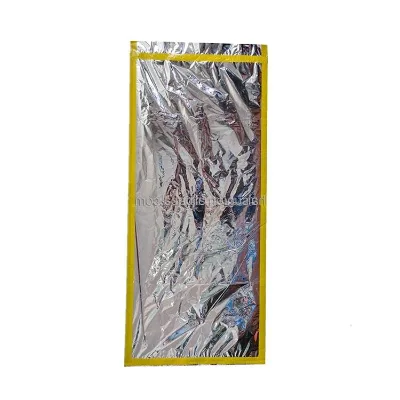
The physical dimensions of these bags are equally significant for logistics and storage. Standardized dimensions often hover around 213 cm by 91 cm, though custom sizing is a prevalent option in this sector. The product is classified as a "Single" size unit, designed to accommodate one adult individual. The weight of the finished product is strictly controlled, with most units falling under the 2 kg threshold, and many weighing significantly less to facilitate rapid deployment and transport. The color profile is predominantly silver, a result of the metallicized coating required to reflect radiant heat.
Technical Performance and Functional Specifications
The primary function of an ultralight foil emergency sleeping bag is thermal regulation. The engineering goal is to minimize heat loss through radiation, convection, and conduction. The metallic surface is designed to reflect approximately 90% of the user's body heat back into the enclosure. This high reflectivity is the core mechanism that allows a person to survive in sub-zero temperatures where ambient air temperatures would otherwise be lethal. The product features are explicitly listed as waterproof, windproof, and sun-protective, ensuring that the thermal barrier remains intact even in adverse weather conditions.
In addition to thermal retention, the product serves as a protective shell against the elements. The "Small Sized" characteristic mentioned in product attributes suggests a compact design that maximizes surface area coverage while minimizing material usage. The usage scenarios are diverse, ranging from outdoor hiking and camping to vehicle-mounted first-aid kits and mountain climbing expeditions. In industrial contexts, these bags are also utilized for fire fighting support and general emergency rescue operations. The ability to retain body heat is not merely a comfort feature but a life-saving specification, making the product a staple in hospital, travel, and vehicle safety inventories.
The customization capabilities of these products are extensive. Buyers can often request custom logos, ODM (Original Design Manufacturing), and OEM (Original Equipment Manufacturing) services. The printing options include logo imprinting, allowing organizations to brand the bags for promotional or identification purposes. However, some standard variants may be supplied without logo printing to reduce costs. The condition of the product is always listed as "New," ensuring that the thermal reflective properties have not been compromised by prior use or degradation.
Compliance, Certification, and Regulatory Standards
When sourcing emergency equipment, verifying compliance with international standards is non-negotiable. The supply chain for these products often involves multiple certification bodies to ensure safety and quality. Common certifications observed in the market include CE (Conformité Européenne), ISO (International Organization for Standardization), and FDA (Food and Drug Administration) approvals, particularly when the product is intended for medical or hospital use. Specific standards such as ISO13485, which relates to medical devices quality management, are frequently cited for products used in healthcare and emergency rescue scenarios.
Buyers must exercise caution when interpreting certification claims. While specific model numbers like WELLMIEN-ESB0017 or WELLMIEN-PESB001 are associated with these certifications, the presence of a certification does not automatically apply to every SKU in a supplier's catalog. It is essential to request current, valid certificates for the specific batch or model being purchased. The standard 213*91cm dimension is often cited alongside these certifications, but buyers should verify if the specific model meets the required safety standards for their intended jurisdiction.
The material composition, specifically the use of polyester and PE, must also align with environmental and safety regulations. The "Eco-Friendly" feature listed in product attributes suggests that some manufacturers are adopting sustainable practices, but this should be verified against local environmental regulations. The "Anti-Bacterial" feature is another critical attribute for products used in medical or long-term storage scenarios, preventing the growth of pathogens within the confined space of the sleeping bag.
Cost Drivers and Pricing Dynamics
The pricing of ultralight foil emergency sleeping bags is influenced by a complex interplay of material costs, manufacturing complexity, and order volume. The observed price range in the market spans from $0.32 to $59 per unit, a wide variance that reflects differences in quality, thickness, and customization levels. The lower end of the spectrum typically corresponds to basic 12-micron models with minimal packaging and no branding. The higher end of the range is driven by thicker 26 or 30-micron films, custom packaging solutions, and extensive OEM branding.
Minimum Order Quantity (MOQ) is a significant factor in the total cost of acquisition. The observed MOQ range is between 5 and 10,000 units. Small buyers or those testing the market may find suppliers willing to accept orders as low as 5 units, though the unit price will likely be higher. Conversely, bulk purchasers can leverage economies of scale to secure prices closer to the lower bound of the range. The "Wholesale Sleeping Bags" classification indicates that this product is often sold in large volumes, making it suitable for government procurement, large-scale retail distribution, and industrial safety programs.
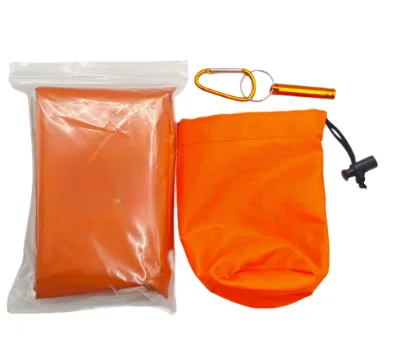
Other cost drivers include the packaging method. Options range from simple OPP bags to more robust box packing or nylon sacks. The unit packing specifications, such as 1 PC/PE Bag with 250 PCS/CTN or 1PC/Zipper Bag with 36PCS/CTN, affect the logistics cost. Custom packaging, while adding value, increases the per-unit cost. Additionally, the origin of the product, primarily Jiangsu, China (Mainland), influences shipping costs and lead times, which are integral components of the total landed cost.
Supplier Evaluation and Quality Control Protocols
Selecting a reliable supplier for emergency sleeping bags requires a rigorous evaluation process. The supplier's location, often Jiangsu, China, provides insight into the manufacturing ecosystem, but buyers must verify the specific factory's capabilities. Key evaluation criteria include the supplier's ability to provide consistent thickness control for the PE film, as variations in micron count can significantly impact performance. Buyers should request sample testing to verify the "Reflects Back 90% of Body Heat" claim, as this is a critical performance metric.
Quality control should extend beyond the final product to the raw materials. The filling material, typically polyester, must be of high quality to ensure durability. The supplier should demonstrate a robust quality assurance system, ideally certified to ISO13485 or similar standards. The "New" condition of the product must be guaranteed, with no signs of prior storage degradation or exposure to UV light that could compromise the reflective layer.
Buyers should also assess the supplier's customization capabilities. The ability to offer ODM and OEM services, including logo imprinting and custom dimensions, is a strong indicator of a mature manufacturing operation. The "Customization: Available" attribute suggests flexibility, but the supplier must demonstrate the technical capacity to maintain quality during the customization process. The "Classify: Factory Supply Attractive Price Emergency Sleeping" attribute indicates a direct-from-factory model, which can reduce costs but requires careful vetting to ensure the supplier is not a middleman with limited control over production quality.
Procurement Logistics and Long-Term Considerations
The logistics of procuring ultralight foil emergency sleeping bags involve careful planning regarding packaging and storage. The standard unit packing options, such as 1PC/Zipper Bag with an Insert or 1PC/PE Bag, are designed for compact storage and easy distribution. The carton specifications, such as 250 PCS/CTN or 36 PCS/CTN, vary based on the product model and packaging type. Buyers must calculate the total volume and weight of the shipment to optimize freight costs.
Long-term procurement considerations include the shelf life and storage conditions of the product. While the materials are generally stable, the reflective foil can degrade over time if exposed to extreme temperatures or humidity. Buyers should establish a rotation schedule for their inventory, especially for emergency stockpiles. The "Winter" classification suggests that these products are optimized for cold weather, but they should be stored in a controlled environment to maintain their integrity.
The "Usage: Outdoor Hiking & Camping & Travel, Promotional" attribute highlights the dual nature of these products. They can be used for both functional safety and marketing purposes. For promotional use, the "Customized Printing" feature allows companies to brand the bags, turning a safety item into a marketing tool. However, the primary function must never be compromised for aesthetic reasons. The "Feature: Anti-Bacterial, Eco-Friendly, Plus Size" attributes offer additional value, but buyers should verify these claims with the supplier to ensure they meet specific project requirements.
Comparative Analysis of Product Variants
To assist in decision-making, the following table compares key attributes of common product variants found in the market. This comparison is based on observed specifications and should be used as a reference for evaluating supplier offerings.
| Attribute | Variant A (Standard Emergency) | Variant B (Heavy Duty/Industrial) | Variant C (Promotional/Custom) |
|---|---|---|---|
| Model Reference | WELLMIEN-ESB0017 | WELLMIEN-PESB001 | WELLMIEN-ESB004 |
| PE Thickness | 12 Micron | 26 or 30 Micron | 12 Micron |
| Primary Material | Polyester | Polyester | Polyester |
| Certifications | CE, ISO, FDA | CE, ISO13485 | CE, ISO13485 |
| Packaging | 1PC/PE Bag, 250 PCS/CTN | 1PC/Zipper Bag, 36 PCS/CTN | 1PC/Zipper Bag, 200 PCS/CTN |
| Customization | Logo Imprinted & Custom | OEM, ODM | Logo Imprinted |
| Usage Focus | Vehicle First-Aid, Travel | Mountain Climbing, Fire Fighting | Promotional, Hiking |
| Weight | < 2 kg | < 2 kg | < 2 kg |
This table illustrates that while the core material and weight remain consistent, the thickness and packaging vary significantly based on the intended application. Buyers should match these specifications to their specific use cases, ensuring that the selected variant meets the necessary durability and certification requirements.
Final Procurement Recommendations
In conclusion, sourcing ultralight foil emergency sleeping bags requires a balanced approach that prioritizes technical specifications, certification validity, and supplier reliability. The wide price range and MOQ flexibility offer opportunities for buyers of all sizes, but the variability in product quality necessitates a rigorous vetting process. Buyers should focus on verifying the PE thickness, confirming the thermal retention claims, and ensuring that the certifications are current and applicable to the specific model.
The "New" condition and "Anti-Bacterial" features are essential for maintaining the product's integrity over time. The ability to customize the product through ODM and OEM services adds value, but the core functionality must remain the primary focus. By adhering to the technical standards and verification protocols outlined in this guide, buyers can secure high-quality emergency sleeping bags that meet the demanding requirements of outdoor, industrial, and medical applications. The ultimate goal is to ensure that every unit procured provides reliable protection and thermal retention when it is needed most.
FAQs
What certifications do these emergency sleeping bags hold?
These products commonly hold CE, ISO, FDA, and ISO13485 certifications. Buyers should verify that specific models like WELLMIEN-ESB0017 carry valid certificates for their intended use in hospitals or outdoor rescue scenarios.
How thick is the PE layer on these foil bags?
The PE thickness varies between 12, 26, and 30 microns depending on the model. Standard emergency units often use 12 microns, while rugged variants may specify 26 or 30 microns for enhanced durability and windproofing.
Can buyers request custom logo printing on these bags?
Yes, customization including ODM, OEM, and logo imprinting is available for most units. Some standard variants may be supplied without printing, but custom options allow for branding in promotional or organizational contexts.
What is the typical weight of a single emergency sleeping bag?
Each unit typically weighs less than 2 kg, making them suitable for rapid deployment. This lightweight profile ensures they are easy to transport in vehicle kits, backpacks, or hospital emergency supplies.
Which materials are used to construct these survival bags?
The filling material is consistently identified as polyester, often combined with a metallicized PE film. This composition provides structural integrity while maintaining the reflective properties needed to retain up to 90% of body heat.
What is the minimum order quantity for these wholesale bags?
The minimum order quantity ranges from 5 to 10,000 units depending on the supplier and customization needs. Small buyers can start with low quantities, while bulk purchasers benefit from lower per-unit pricing tiers.
How do these bags reflect body heat to keep users warm?
The metallicized surface reflects approximately 90% of body heat back to the user. This thermal regulation mechanism allows survival in sub-zero temperatures by minimizing heat loss through radiation and convection.